Blog
AI Crawler Access Audit: How to Check Whether AI Assistants Can Read Your Site
Run an AI crawler access audit in five layers: robots.txt, CDN/WAF rules, rate limits, origin and rendering. Includes a per-bot policy table and owner model.
Generative engine optimization tracking tools compared by run count, prompt-set design, reporting format and templates for B2B teams, plus agency criteria.
 Ishan ManchandaOct 28, 2026

Run an AI crawler access audit in five layers: robots.txt, CDN/WAF rules, rate limits, origin and rendering. Includes a per-bot policy table and owner model.

A vendor-neutral scorecard for choosing who can help you get cited in AI answers: metrics, attribution, kill criteria, contract terms and break-even math.
AI search visibility platforms cost $99 to $20,000 a month. See dated price bands by source and the break-even math: 0.4 to 1.6 deals at $30K ACV.
Request a quote and our experts will contact you within 24 hours with tailored solutions and pricing.
Last updated: Oct 28, 2026
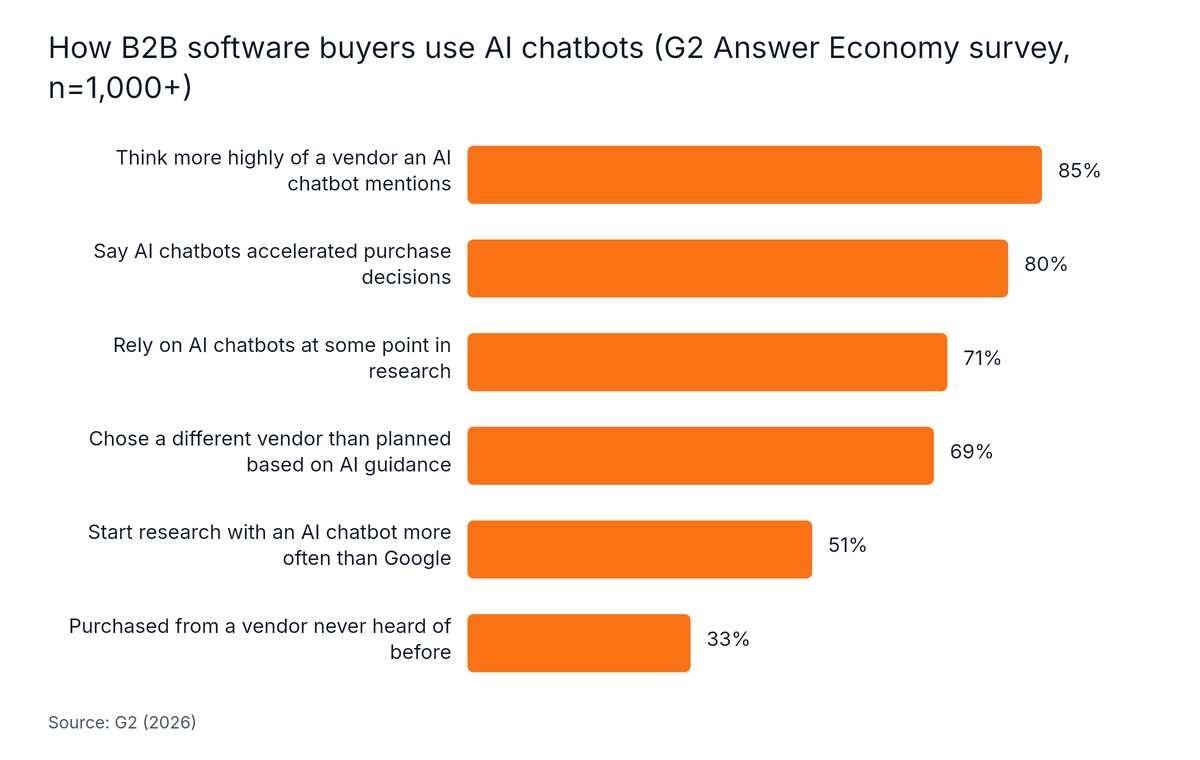
Generative engine optimization (GEO) tracking tools are software that sends a fixed set of buyer prompts to AI assistants such as ChatGPT, Perplexity and Gemini, repeats them, and reports how often a brand is named or cited over time. A B2B team does not need more dashboards. It needs a defensible number. In a 28-day study, ChatGPT returned an identical brand set on only 0.3% of day-pairs (Detailed.com, 2026), so one check proves nothing. Meanwhile, 51% of B2B software buyers now start research with an AI chatbot more often than Google (G2, 2026). This toolkit covers tool types, prompt-set design, reporting format, templates and agency criteria that turn noisy answers into a range a CFO can read. It builds on the answer engine optimization versus SEO pillar.
Key Takeaways
- Generative engine optimization tracking tools support a defensible report only when they expose how many runs sit behind each citation frequency.
- A single GEO checker run is not evidence: ChatGPT returned an identical brand set on only 0.3% of day-pairs in a 28-day study (Detailed.com, 2026).
- A GEO prompt set of 10 prompts with 7 phrasings gives ±12 percentage points, and four passes narrow it to ±6 (Gumshoe.ai, 2026).
- A GEO template should score crawler access per bot, answer fit and content format on one row per page.
- A GEO agency worth hiring shows a named B2B case with CRM-linked pipeline, not only citation counts.
Generative engine optimization tracking tools fall into four types: prompt-monitoring checkers that report citation frequency, crawler-access auditors that check per-bot policy, attribution tools that tie AI-referred sessions to pipeline, and content analyzers that test page answer fit. The deciding test is run count: a tool that reports one run per prompt cannot support a citation-frequency range (Gumshoe.ai, 2026).

| Tool type | Question it answers | Must expose | Common gap |
|---|---|---|---|
| Prompt-monitoring checker | How often is the brand named or cited? | Runs per prompt, interval, raw export | Reports a point, not a range |
| Crawler-access auditor | Can each AI bot fetch the page? | Per-bot result by path | Treats all bots as one rule |
| Attribution layer | Do AI-referred sessions become pipeline? | GA4 channel and CRM source fields | Misses AI visits filed as "direct" |
| Content analyzer | Does the page answer the exact question? | Page-level answer-fit notes | Not tied to observed citations |
Named products are deliberately not ranked here. No independent test of them exists in the research behind this article, and vendor-written rankings repeat the self-scoring problem. Shortlist by the criteria in this toolkit instead.
The reason to care is buyer behavior. Among B2B software buyers, 69% chose a different vendor than planned based on AI guidance, and 33% bought from a vendor they had never heard of (G2, 2026). G2 puts the shift this way: "the first impression of your brand, category, and competitors is increasingly formed inside an AI answer" (G2, 2026).
Source: G2, 2026
For a wider comparison, see the AEO and GEO tools comparison and how to pick a tool with boardroom-ready numbers.
A single GEO checker run is meaningless because AI answers rarely repeat. In a 28-day daily study of ChatGPT, only 0.3% of day-pairs returned an identical set of brands (Detailed.com, 2026). The leading brand still appeared on 82% of days (Detailed.com, 2026), so the useful metric is frequency across many runs, not one screenshot.
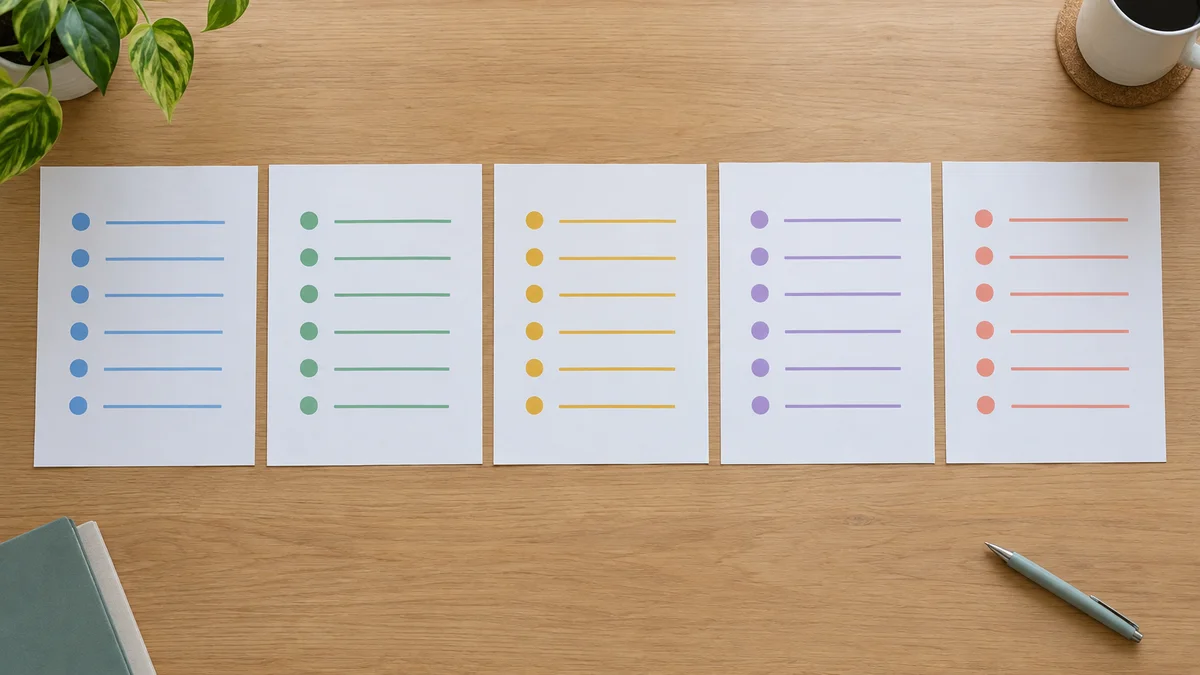
Citation frequency is the share of repeated runs of a fixed prompt set in which an AI assistant names or cites a brand, reported as "cited in x of N runs". A page cited in 14 of 50 runs is cited 28% of the time, yet it would look "not cited" in many single checks (illustrative figures).
The same study found that only 2.4% of day-pairs returned an identical set of cited domains. In AI Overviews, the leading brand appeared on 89% of days (Detailed.com, 2026).
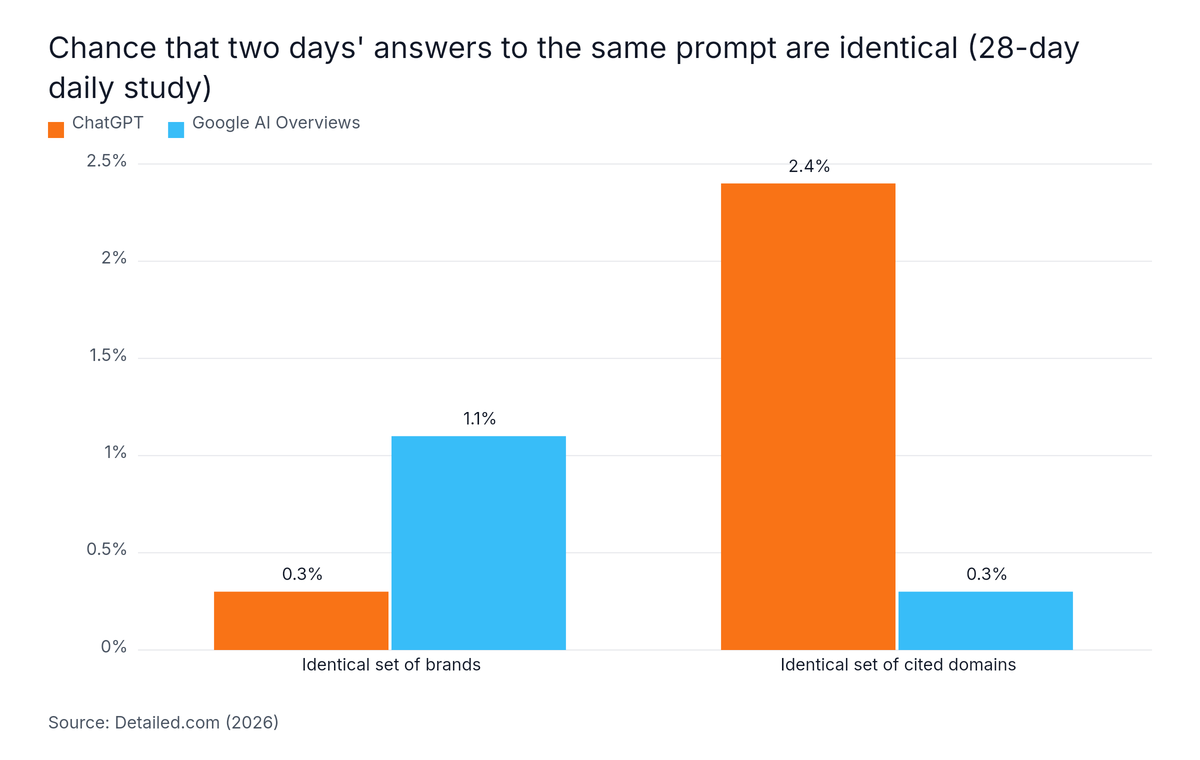
Source: Detailed.com, 2026
Sources churn faster than brands. Over 17 weeks of tracking 82,619 prompts, Google replaced 56% of cited sources weekly and ChatGPT replaced 74% (SISTRIX, 2026).
Few GEO checkers publish their run counts, so each tool must be asked directly. A reliable range needs many repeated runs: SparkToro and Gumshoe's 2,961-run study treats visibility percentage over 60 to 100 runs as the defensible metric (SparkToro, 2026). Ask for runs per prompt, the interval and raw export.

A checker that cannot answer the first two questions produces screenshots, not evidence. The same 2026 study found that ChatGPT, Claude and Google AI almost never repeat the same brand list (SparkToro, 2026).
A defensible GEO prompt set uses several intent clusters, multiple phrasings per prompt and repeated passes, then reports citation frequency as a range. Gumshoe.ai's published formula shows 10 prompts with 7 phrasings (70 observations) gives ±12 percentage points, and four passes narrow that to ±6 (Gumshoe.ai, 2026).

A prompt set is a fixed list of buyer questions, grouped by intent and phrased several ways, that is re-run on a schedule. Build it in this order:
Margin of error is the width of the range around a measured citation frequency, and it shrinks as observations grow. A 2026 arXiv paper found that source overlap within 24 hours averaged only 32 to 43% and argued against measuring once (arXiv, 2026). A separate 2026 arXiv survey (arXiv, 2026) calls seven to eight repetitions per prompt a starting point, not a standard, and advises repeating until the interval is narrow enough for the decision. Keep fixed-condition repeats (same day, same settings) apart from rolling weekly repeats, so freshness is not mistaken for noise.
| Observations | Margin of error (Gumshoe.ai formula) |
|---|---|
| 70 (10 prompts × 7 phrasings) | ±12 pp |
| Four passes of the same set | ±6 pp |
Report two views, not one, because brand mentions are steadier than cited URLs.
| Metric | Example format | Notes |
|---|---|---|
| Brand citation frequency | Cited in 14 of 50 runs (28%), n=50, interval stated | Illustrative figures |
| Source churn | Share of cited URLs new versus last pass | Reported separately |
| Engine split | One line per ChatGPT, Perplexity, Gemini | Never blend engines |
| AI-referred sessions | GA4 channel group count | Tagged separately from direct |
No single GEO software category is guaranteed to cover content analysis, crawler access checks and citation tracking together, so a structured template fills the gap: one spreadsheet row per page, scored on crawler access, answer fit, content format, trust and tracking. Access must be checked per bot, because roughly half of sites that block GPTBot still allow OAI-SearchBot (Suff Digital, 2026).
The template follows the Failure-Point Test, a three-part page diagnostic: can the machine read it, does it answer the exact question, is the source trusted. A per-bot policy is a crawler-access rule set that allows or blocks each AI bot by site path. Autumn 2026 robots.txt studies show most sites block AI training bots more than AI search bots (Suff Digital, 2026), which is why copied robots.txt files cause accidental blocks.
| Template column | Check | Pass condition |
|---|---|---|
| Crawler access | GPTBot, OAI-SearchBot, ClaudeBot, PerplexityBot, Google-Extended each tested by path | Search and retrieval bots allowed on public paths |
| Rendering | Page text visible without JavaScript | Server-side rendered |
| Answer fit | Heading matches the buyer's question; answer in first 40 to 80 words | Direct, self-contained answer |
| Content format | Lists and tables for any set of items | Extractable structure |
| Trust | Third-party corroboration exists | Source named and dated |
| Tracking | Page appears in the fixed prompt set | Frequency logged per run |
Rank fixes in order: access first, then answer fit, then trust. When buying software, test each module separately and ask for per-bot checks, page-level answer-fit notes and run-level citation exports. For tactics with evidence behind them, see GEO techniques with evidence.
For the weekly platform and crawler-policy changes that affect this template, Get the weekly brief.
A GEO agency that can show B2B pipeline impact names the exact prompts it monitors, states run counts and intervals, and links a named case to CRM-recorded AI-referred pipeline. Citation counts alone are not enough, because no placement can be guaranteed when recommendation lists almost never repeat (SparkToro, 2026).

Our data: Salient by GrowthSpree, an affiliate of aeogeo.com and a managed AEO/GEO service, reports 48,800 citations and $165,000+ pipeline across its clients (Salient pitch deck; launched September 2026). These are company-reported figures, not independent research.
Break-even deals equal spend divided by (ACV × gross margin). At $30,000 ACV and 75% margin, a six-month engagement needs 0.4 deals at $1,500 per month, 0.8 at $3,000 and 1.6 at $6,000. Six months of spend is $9,000, $18,000 and $36,000 respectively. These are illustrative figures. For deeper vetting, see how to evaluate an AEO or GEO agency, a structured comparison framework and in-house versus agency.
A GEO tracking toolkit of this kind is not for B2C businesses, very small sites with little to be cited, or teams whose AI crawlers are blocked. Independent evidence linking citation frequency to pipeline is also thin: most data is survey-based, such as the 66% of B2B professionals who regularly use AI to research vendors (Semrush, 2026).
Three limits apply:
Independent data on how law firms measure GEO is thin as of October 2026. The sound approach is the same method used elsewhere: a fixed prompt set built from client questions, repeated runs, and a reported citation-frequency range. Firms should also check attorney-advertising rules and client confidentiality before publishing answer-style content.
Yes, a single spreadsheet can cover all three. One row per page scores crawler access per bot, answer fit to the exact question, content format, third-party trust and tracking status. The Failure-Point Test, which asks whether the machine can read the page, whether it answers the question and whether the source is trusted, is one such structure.
Few GEO checkers state their run counts, so the answer must be verified per tool. A reliable range needs repeated runs: SparkToro and Gumshoe's 2026 study treats visibility percentage over 60 to 100 runs as the defensible metric. Ask any checker for runs per prompt, the interval it reports, and raw export.
No single category of GEO software is guaranteed to cover all three, so each module should be tested separately before purchase. Ask for per-bot crawler checks, page-level answer-fit analysis and run-level citation exports. Where one product falls short, a spreadsheet template and a separate checker can fill the gap.
A GEO agency can show pipeline impact only if it provides a named B2B case with CRM-linked AI-referred pipeline, the exact prompts monitored, run counts and intervals. Treat any guaranteed placement as a red flag, because AI recommendation lists almost never repeat. A control group and a 90-day exit clause are further signs of rigor.
Generative engine optimization tracking tools are only as good as the method behind them. A single check is noise, so B2B teams should report ranges built on repeated runs. For more on AI search visibility tools and their limits, see the related guide.
Next step: build the prompt set this week, run the first four passes, and record the baseline range.
Written by
Ishan Manchanda
Ishan Manchanda is co-founder of GrowthSpree, a B2B SaaS marketing consultancy founded in 2017 that has managed $60M+ in ad spend across 300+ B2B SaaS companies. He focuses on demand generation, go-to-market strategy and pipeline growth, and has been featured in Silicon Valley Times, SaaS Mag and the Unbounce podcast.